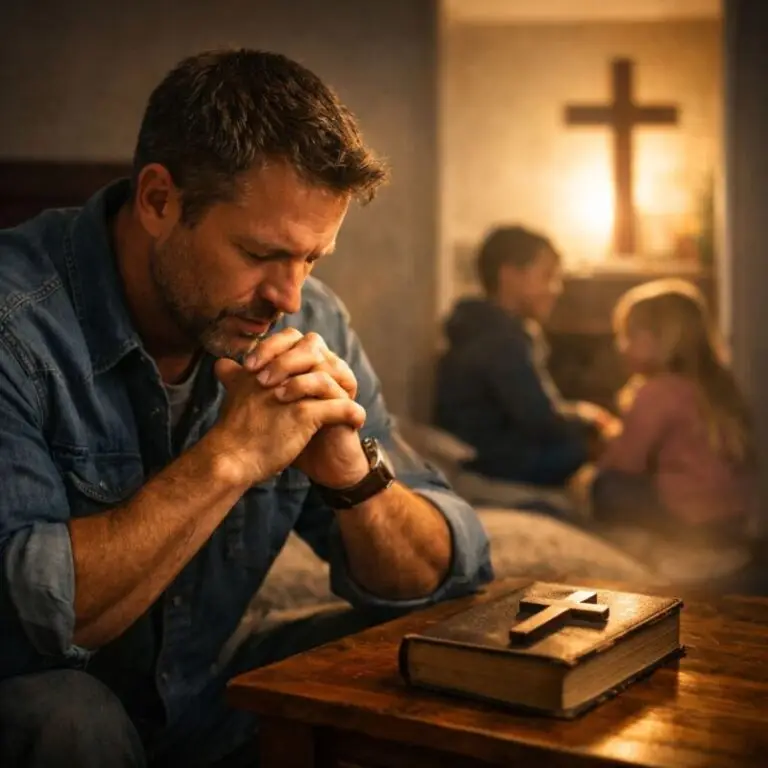
When the House Gets Too Quiet
For many divorced fathers, the hardest moments are not the courtroom days, the arguments, or even the paperwork. The hardest moments are the quiet ones.
The silence.
When the kids leave after the weekend.
When the house that once felt alive suddenly feels empty.
When you sit down on the couch and realize the noise that used to fill your life is gone.
Those are the moments when Faith in the Quiet Moments becomes essential.
It’s easy to trust God when life is loud and full. But faith is often built in the stillness—when there’s nothing left to distract you from your thoughts, your pain, or your prayers.
Why the Quiet Moments Feel So Heavy
Divorce reshapes a father’s life in ways few people truly understand.
Your identity changes.
Your daily rhythm changes.
Your role as a father becomes scheduled rather than constant.
The quiet moments can feel like loss echoing through the walls.
I remember one father telling me:
“The worst part isn’t when the kids leave. It’s about two hours later when the house finally goes silent.”
That silence can invite loneliness, regret, anger, or doubt. But it can also become something else entirely.
It can become sacred space.
Faith in the Quiet Moments: When God Meets You There
The truth is, God often speaks the loudest when everything else is quiet.
Faith in the Quiet Moments grows when a man stops running from the silence and starts bringing it to God.
Those empty evenings can become:
-
Prayer time
-
Reflection time
-
Healing time
-
Preparation time
Some of the strongest men of faith in Scripture met God in quiet places—deserts, caves, mountains, or lonely nights.
Your quiet house might be your version of that wilderness.
Not punishment.
Preparation.
A Story Many Fathers Know
One dad I coached shared something powerful.
After his divorce, he dreaded the evenings his kids went back to their mother’s house. The quiet was unbearable. So he did what many men do—he tried to drown it out with TV, scrolling, or staying busy.
But the emptiness didn’t go away.
Eventually, he tried something different.
Instead of avoiding the silence, he started sitting with it.
He’d grab a Bible, make a cup of coffee, and spend 15 minutes praying for his kids.
Not long sermons. Just simple prayers.
Over time, those quiet nights changed.
They became the place where he rebuilt his relationship with God—and slowly rebuilt himself.
That’s Faith in the Quiet Moments.
How to Strengthen Faith in the Quiet Moments
1. Turn Silence Into Prayer
Instead of filling the silence with noise, fill it with prayer.
Talk to God about:
-
Your fears
-
Your regrets
-
Your hopes for your children
-
The man you want to become
You don’t need perfect words. God honors honest ones.
2. Build a Quiet Routine
Consistency strengthens faith.
Try creating a simple routine when the house gets quiet:
-
10 minutes of Scripture
-
10 minutes of prayer
-
10 minutes of reflection or journaling
It doesn’t have to be complicated. Faith grows through steady steps.
3. Remember Your Role Isn’t Over
Divorce may change how often you see your children, but it does not remove your influence as a father.
In fact, these quiet seasons can prepare you to become:
-
A more patient father
-
A wiser leader
-
A spiritually grounded man
The work God is doing in you during the silence will show up when your kids are with you.
4. Don’t Walk the Quiet Season Alone
Faith grows stronger in community.
That’s why many men benefit from connecting with other fathers who understand the journey.
If you’re looking for a place to grow alongside other men navigating life, leadership, and fatherhood, consider joining the Motivated Men’s Group hosted by Northman Coaching:
https://www.northmancoaching.com/upcoming-events/
You’ll find encouragement, accountability, and real conversations about faith and masculinity.
You can also connect with other men inside the Legacy Crew community here:
https://www.facebook.com/groups/502901508784125
Faith in the Quiet Moments Can Change You
The quiet moments after divorce can feel like the end of something.
But they can also become the beginning of something deeper.
Faith in the Quiet Moments transforms loneliness into prayer, silence into reflection, and emptiness into spiritual growth.
God does some of His best work in the stillness.
The question is not whether the quiet will come.
It will.
The real question is: What will you do with it?
If you’re navigating divorce, rebuilding your faith, or trying to become the man and father God created you to be, you don’t have to figure it out alone.
You can schedule a free 60-minute consultation call here:
https://www.northmancoaching.com/free-consultation/
You can also follow along and join the conversation here:
-
Facebook: https://www.facebook.com/oakvalues
-
Instagram: https://www.instagram.com/northman_coaching
-
YouTube: https://www.youtube.com/@oakvalues
-
Northman Skool Community: https://www.skool.com/northman-coaching-7275/about
Conclusion
Every divorced father eventually faces the quiet.
But silence doesn’t have to mean loneliness.
It can mean listening.
When a man learns to practice Faith in the Quiet Moments, the empty house becomes a place where God rebuilds strength, purpose, and leadership.
And that transformation doesn’t just change you.
It changes the father your children will see when they walk back through the door.
FAQs
Why are the quiet moments after divorce so difficult for fathers?
Quiet moments often highlight the emotional weight of separation from children and the shift in daily routines. The silence can trigger feelings of loneliness, grief, or uncertainty.
How can faith help during lonely seasons?
Faith provides perspective and connection with God during difficult seasons. Prayer, Scripture, and reflection can transform loneliness into a time of spiritual growth.
What practical steps help build Faith in the Quiet Moments?
Developing a routine of prayer, reading Scripture, journaling, and connecting with other men through supportive communities can strengthen faith and resilience.
Is it normal for fathers to struggle emotionally after divorce?
Yes. Many fathers experience grief, identity shifts, and loneliness after divorce. Seeking support, community, and spiritual guidance can help navigate the transition in a healthy way.