Divorce Fatherhood Faith Forward
There are seasons in a man’s life when everything familiar seems to crack at once. Divorce Fatherhood Faith Forward is about what happens next. It is about the man who sits in the silence after the papers are signed, wondering whether his children will only remember the worst parts of him. It is about the father who carries regret, shame, and unanswered prayers, yet still hears God whisper, “Get up. I am not finished with you.”
Divorce can feel like failure in its rawest form. It can shake a man’s identity, his confidence, his home, and his sense of direction. But the future does not have to mirror the failure. A broken chapter does not mean a ruined story. With humility, truth, and faith, a father can still lead his children well. He can become more grounded, more present, more honest, and more surrendered than he has ever been before.
I think of a man who once told me that after his divorce, he stopped recognizing himself. He had been angry for years, distracted for years, and emotionally absent longer than he wanted to admit. When the marriage ended, he thought the label “divorced dad” would define the rest of his life. But in the quiet, God began to work on him. He started praying before every custody exchange. He began speaking more gently to his children. He apologized without excuses. He stopped trying to win every argument with his ex and started focusing on becoming the kind of man his kids could trust. That is the road of Divorce Fatherhood Faith Forward. Not perfection. Progress.
Divorce Fatherhood Faith Forward Begins With Ownership
A man cannot move forward in faith while hiding behind blame. Yes, there may be real pain, betrayal, and injustice in the story. Yes, there may be wounds that still ache deeply. But fatherhood after divorce requires courage, and courage begins with ownership.
Ownership does not mean carrying all the guilt for everything that went wrong. It means asking honest questions:
-
Where was I passive?
-
Where was I prideful?
-
Where did I stop listening?
-
Where did I fail to lead with patience, honesty, and love?
This kind of reflection is not weakness. It is masculine strength under God’s authority. Real leadership starts when a man stops defending every flaw and starts inviting God to transform him.
Children do not need a father who has all the answers. They need a father who is teachable. They need to see humility in motion. When a dad can say, “I was wrong,” “I am still growing,” and “I want to honor God in how I lead you,” he gives his kids something powerful: a model of repentance without shame.
That kind of man becomes safer to trust.
Why Divorce Fatherhood Faith Forward Requires Humility
Humility changes the atmosphere around fatherhood. It lowers defensiveness. It softens harsh responses. It creates room for healing in relationships that have been strained by conflict.
After divorce, many fathers feel pressure to prove themselves. They want to look strong, capable, and unaffected. But children connect more deeply with authenticity than performance. They do not need a polished father. They need a present one.
Humility may look like this:
-
listening without interrupting
-
resisting the urge to speak negatively about their mother
-
admitting when your emotions are running the conversation
-
choosing prayer over panic
-
staying consistent even when appreciation is absent
A humble father is not a weak father. He is a grounded father. He knows his strength comes from God, not from control.
Leading Children With Clarity After Divorce
Children need clarity when life feels unstable. Divorce changes rhythms, homes, expectations, and emotions. Even when parents try to protect them, kids often carry confusion they do not know how to express.
A faith-forward father brings calm through clarity.
That means being honest in age-appropriate ways. It means explaining what is happening without pulling children into adult conflict. It means keeping routines where possible. It means following through on promises. It means becoming a steady presence when so much else feels uncertain.
Clarity also comes from values. A father should know what he is building in his children. Integrity. Respect. Courage. Responsibility. Compassion. Faith. Emotional honesty. A divorced dad still has the authority and opportunity to shape these things.
Your house may be smaller now. Your time may be split. Your heart may still be recovering. But your influence is not gone.
Children remember how a father made them feel. Safe or anxious. Seen or overlooked. Guided or ignored. Divorce Fatherhood Faith Forward reminds men that leadership is not measured only by what was lost in marriage, but by what is still being built in fatherhood.
Divorce Fatherhood Faith Forward in Everyday Moments
Most fathers imagine leadership in big moments, but children are usually formed in ordinary ones.
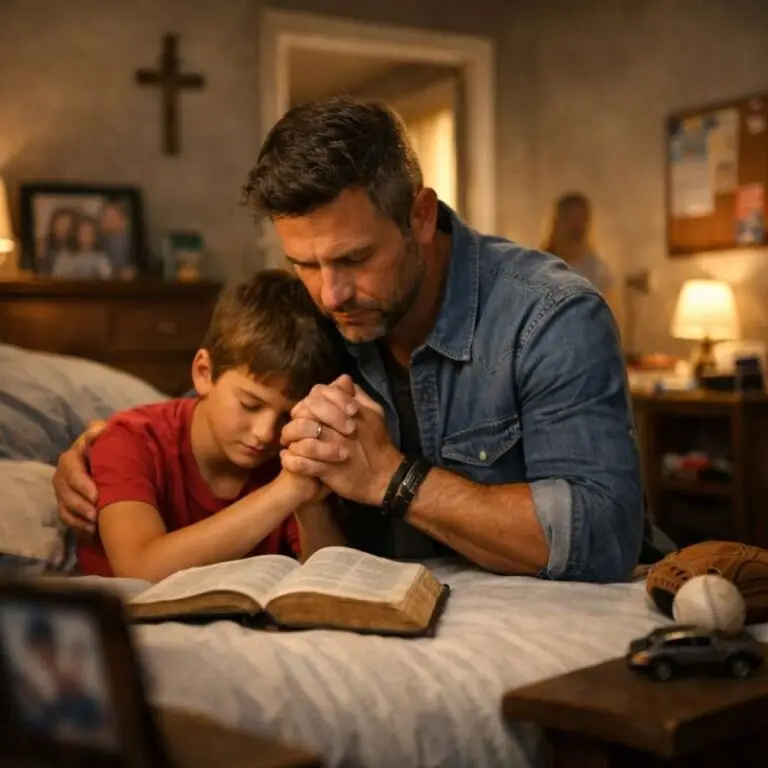
Leadership looks like praying with your kids before bed.
Leadership looks like putting your phone away and looking them in the eye.
Leadership looks like staying calm when they act out because their little hearts are carrying more than they can explain.
Leadership looks like speaking life over them when they blame themselves for the divorce.
Leadership looks like teaching sons that strength includes tenderness, and teaching daughters that love should feel safe and consistent.
These moments may seem small, but they are holy ground. Faithfulness is often built there first.
Faith Forward Means Trusting God With What You Cannot Repair Alone
Some men live after divorce as though everything depends on them. They replay old conversations, rehearse new fears, and carry a constant pressure to fix what has been broken. But there comes a point where a father has to release what only God can heal.
Faith forward does not mean pretending the pain is gone. It means refusing to let pain become the only voice that leads you.
Scripture consistently points men back to dependence on God. Not because men are incapable, but because they were never meant to carry life alone. A father walking in faith learns to bring his fear, loneliness, anger, and regret before God instead of letting those things shape his parenting.
That spiritual discipline matters. It will affect your tone, your reactions, and your peace.
Here are a few ways to build that rhythm:
Pray Before You React
There will be texts that trigger you. Conversations that exhaust you. Decisions that feel unfair. Before reacting, pause and pray. Ask God for wisdom, restraint, and clean motives.
Keep Short Accounts With God
Bitterness grows fast after divorce. Confess it early. Bring resentment into the light. Let God deal with what you are tempted to bury.
Stay Rooted In Community
Isolation is dangerous for divorced fathers. Men need other godly men who will challenge, encourage, and sharpen them. That is one reason many men benefit from joining the Motivated Men’s Group and staying connected through the broader Northman Coaching community.
Let Your Kids See Your Faith
Not performative faith. Real faith. Let them see you pray. Let them hear you thank God. Let them watch you stay soft-hearted when life would have given you every excuse to harden.
Rebuilding Trust With Your Children
One of the deepest fears a father carries after divorce is this: “What if I’ve already done too much damage?”
That fear is real, but it does not get the final word.
Trust is rebuilt slowly. Not through speeches, but through consistency. A father rebuilds trust when he keeps showing up. When he becomes dependable. When his words and actions begin to match over time. When he chooses patience over ego. When he listens long enough to hear what his children are really saying underneath their behavior.
For some men, rebuilding trust will involve apology. A real apology does not defend itself. It does not shift blame. It does not say, “I’m sorry, but…” It says, “I know I hurt you. I wish I had done better. I am asking God to help me become better.”
That kind of honesty can open doors that pride keeps shut.
Trust can also grow in the co-parenting relationship. Not always reconciliation. Not always friendship. But maturity. Respect. Boundaries. Restraint. Children benefit when fathers refuse to use them as emotional messengers or weapons in adult pain.
A man of faith leads differently. He remembers that how he handles conflict is still part of what his children are learning from him.
When Your Child Pulls Away
Some children become clingy after divorce. Others become distant. A withdrawn child is not always rejecting you. Sometimes he is confused. Sometimes she is grieving. Sometimes they do not know how to carry divided loyalty.
Do not answer distance with more distance.
Keep reaching gently. Keep showing up. Keep speaking with warmth. Keep your posture open. Even when your child cannot name what is happening inside, your steadiness can help them feel safe again.
Masculinity, Fatherhood, and the New Chapter
A lot of men secretly believe divorce disqualifies them from leadership. They think because they failed in one area, they have lost the right to lead in any area. That is a lie.
A man is not defined only by the worst thing he survived or the worst decision he made. Biblical masculinity is not about image management. It is about courage, responsibility, servant leadership, and surrender to God.
That means this new chapter can still be strong.
You can still lead your children with conviction.
You can still become emotionally healthy.
You can still learn how to love with wisdom and boundaries.
You can still build a home marked by peace.
You can still serve, protect, and guide.
And you can still create a future that looks nothing like the failure behind you.
That is the hope inside Divorce Fatherhood Faith Forward. Not that the past disappears, but that redemption is real.
Practical Next Steps for Divorce Fatherhood Faith Forward
Here are a few grounded ways to move forward:
1. Build a Simple Spiritual Routine
Start with ten minutes a day. Read Scripture. Pray honestly. Sit quietly before God. Consistency matters more than intensity.
2. Create Predictable Rhythms With Your Kids
Meal traditions, prayer at bedtime, Saturday outings, phone calls on off days—small rhythms build security.
3. Speak With Respect About Their Mother
Even when it is hard. Even when boundaries are needed. Your restraint protects your children.
4. Ask Better Questions
Instead of “How was school?” try “What felt hard today?” or “What made you smile today?” Better questions build deeper connection.
5. Get Support
Strong men ask for help. Consider a free 60-minute consultation call if you need support navigating fatherhood, identity, healing, and leadership after divorce.
6. Stay Connected to Growth
You do not have to do this journey alone. Engage with Northman Skool, follow along on Instagram, join the conversation on Facebook, connect with the Legacy Crew Group, and watch encouragement on YouTube and TikTok.
Conclusion
Divorce may have changed your life, but it does not have to define your fatherhood. The future does not have to mirror the failure. God still works through surrendered men. He still restores what pride, pain, and passivity once damaged. He still teaches fathers how to lead with humility, clarity, and conviction.
If you are in that place right now—tired, regretful, uncertain, but willing—do not step back. Step forward in faith. Your children do not need a flawless father. They need a faithful one.
And faithful men, by God’s grace, can change the story.
FAQs
What does Divorce Fatherhood Faith Forward mean?
It means a man does not have to let divorce define the rest of his identity or leadership. He can move forward with humility, faith, and intentional fatherhood.
Can a father rebuild trust with his kids after divorce?
Yes. Trust is usually rebuilt through consistency, honesty, patience, and emotional presence over time.
How can I lead my children spiritually after divorce?
Pray with them, model authentic faith, speak truth with gentleness, and create simple spiritual rhythms that make your home feel steady and safe.
What should I avoid doing as a divorced father?
Avoid speaking negatively about their mother to your children, using them to carry adult emotions, making promises you cannot keep, and withdrawing when things feel uncomfortable.
Is it weak to ask for help after divorce?
No. Asking for help is often one of the strongest things a man can do. Wise men seek counsel, community, and support.